No products in the cart.
14 October 2026

A survey published by the NHS earlier this year revealed violence toward staff has reached a three-year high, with 1 in 7 workers (14.47%) being physically attacked by a patient or member of the public in the last 12 months.
These figures shed light on a persistent challenge for those working in the healthcare sector, where abuse and aggression are daily realities and employee wellbeing is consistently jeopardised.
For those responsible for the design of NHS estates, the findings raise an important question: if violence is a foreseeable risk, how does that impact the development of healthcare facilities? And, what role does specification play in creating safer working environments for staff?
Integrating security measures, such as CCTV, alarms and access controls early in the planning of a healthcare facility ensures that staff safety is a priority from the outset. By giving full consideration to the potential risks healthcare staff face, specifiers can take the necessary steps to mitigate harm and introduce measures that will protect the health and wellbeing of those on site.
This approach reflects a wider change in healthcare settings: modern facilities are expected to support both patient care and staff safety in real time. Designing environments that aid swift response times, maximise security, and ensure accurate communication is essential to meet the demands of contemporary healthcare spaces.
When something does go wrong, be it an aggressive member of the or a patient experiencing a medical emergency, staff cannot always step away or call for help. Access to a swift response can determine whether an incident escalates further or is successfully contained.
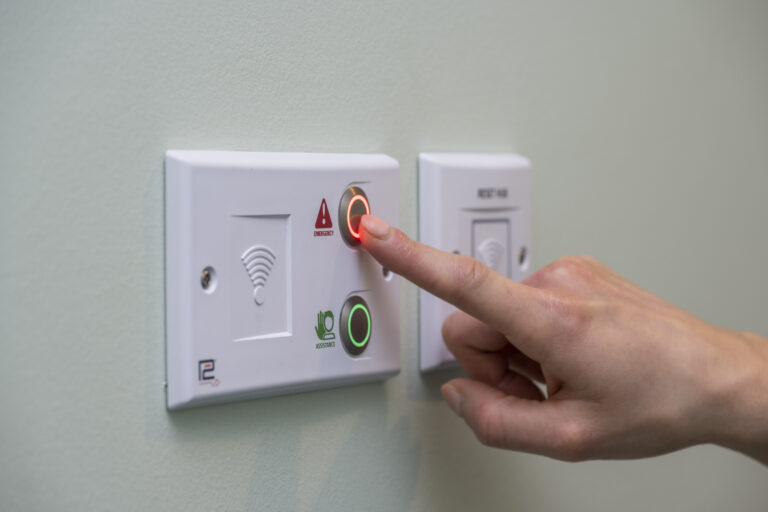
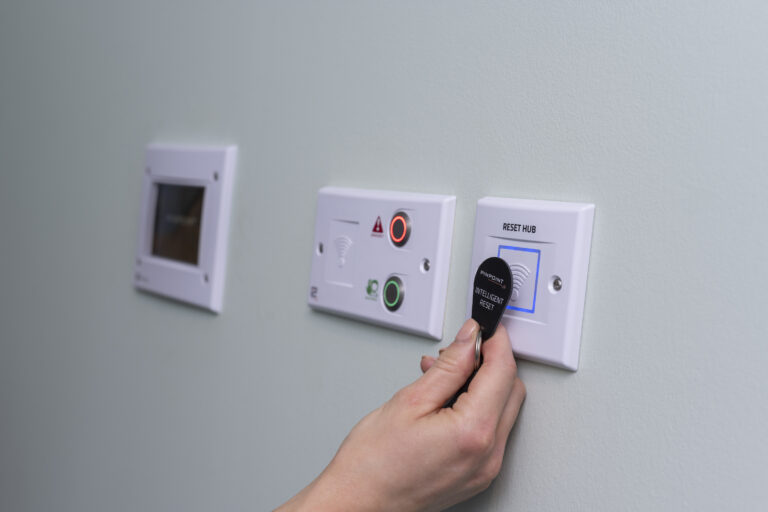
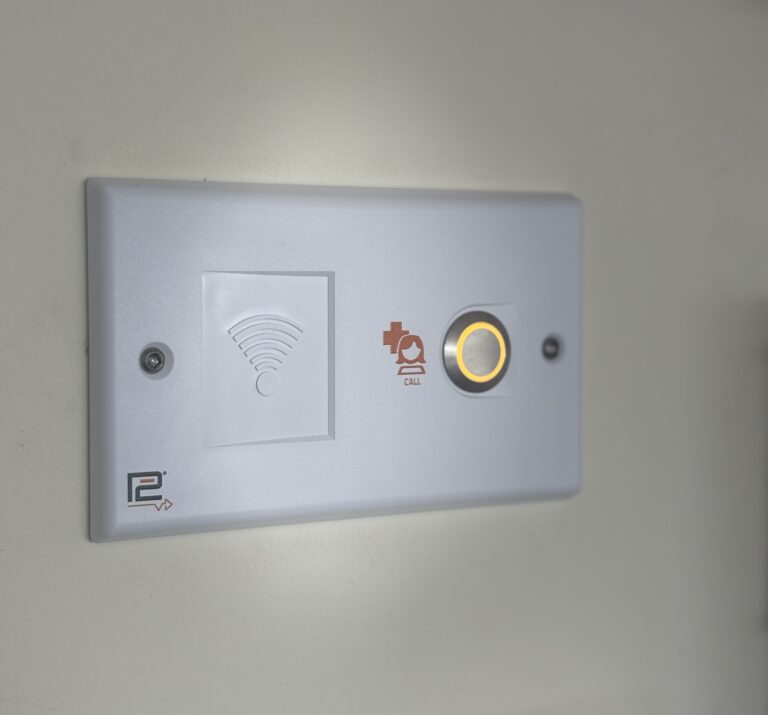
This is where Pinpoint’s staff alarm system comes in. By enabling healthcare workers to discreetly summon assistance, our P2 system ensures that high-risk situations are quickly addressed and the necessary support is delivered to the right place at the right time.
For specifiers and contractors looking into staff safety measures, Pinpoint’s safety alarm systems offer a reliable, accurate and easy-to-use solution to the threat of patient aggression. Trusted by NHS providers across the UK, our staff attack alarms ensure healthcare workers can access a rapid response when needed, reducing the risk of harm and strengthening staff confidence in their safety.
Including staff alarm systems within the specification process embeds them within the layout and wider systems of the facility. Doing so guarantees alarms can be integrated with building features such as CCTV, access control and even anti-ligature technology to further enhance site and patient security. With an increasing emphasis being placed on integrated building management systems and smart monitoring tools, designers should consider the role of safety alarms within the wider building infrastructure early on in the planning process to aid seamless construction and installation.
Equally, embedding safety requirements within building specifications reduces the need for late-stage redesigns and expensive retrofits. In a sector where budgets are necessarily tight, getting it right first time is essential. Adopting proven safety solutions, such as Pinpoint’s P2 System, ensures future-ready facilities that maximise ROI, strengthen client confidence and enhance long-term outcomes.
When safety systems are part of that wider environment, the result is not just faster response, but better coordination overall.
For specifiers and contractors exploring staff safety alarms for an upcoming project, there are a few key elements to consider:
With over 30 years of experience working with architects and specifiers, Pinpoint recognises the unique mix of regulatory, financial and technical challenges that come with designing modern healthcare environments.
Our P2 System has been designed with these concerns in mind, delivering a powerful solution to protect staff in high-risk working environments, while adhering to necessary specification criteria.
And with product datasheets readily available on the Pinpoint website, architects, designers, specifiers and contractors can easily access product information whenever needed.
Placing staff safety at the centre of building design sends a clear message that violence and aggression won’t be tolerated. This starts with specifying the right security system for the building.
Choosing safety alarms that are accurate, reliable, and can integrate with wider facility features is crucial to developing a robust, responsive environment that protects both staff and patients. Because when staff know they can call for help quickly and easily, it changes how they work. When they feel safe, they are better able to focus on delivering patient care, enhancing long-term treatment outcomes and patient wellbeing.
Designing for safety ensures that when situations arise, support is immediate, coordinated and reliable. That’s not just a technical consideration; it’s a fundamental part of building spaces that enable safe, effective care.
Exploring the best staff safety alarm for an upcoming project? Get in touch with our team to discuss whether the Pinpoint System is the right fit for the job.