No products in the cart.

12 March 2026


Published last year, the Mental Health Commission’s 2024 Annual Report offered a stark snapshot of the pressures facing Irish mental health services. The Commission issued 31 enforcement actions across 20 approved centres, citing serious concerns that care and treatment in some facilities posed a risk to the safety, health and well-being of both patients and staff. Inspectors also identified hundreds of non-compliance issues in areas such as risk management and the condition of premises.
Nearly a year on, mental health facilities across Ireland are taking tangible steps to strengthen safety and compliance, with many investing in enhanced risk management measures and modern staff safety systems designed to better protect frontline teams.
We look at these changes and how they signal a broader shift in how Irish mental health services are evolving, moving towards safer, more resilient care environments.
The relationship between staff safety and the quality of patient care in mental health settings is well established. At a time when a significant portion of healthcare workers are considering leaving the profession due to burnout, and when numerous staff feel unheard or undervalued by their employers, creating environments where staff feel protected and supported has become critical. This is why more centres across Ireland are prioritising proactive measures such as staff safety alarms, enabling staff to call for immediate support when it matters most.
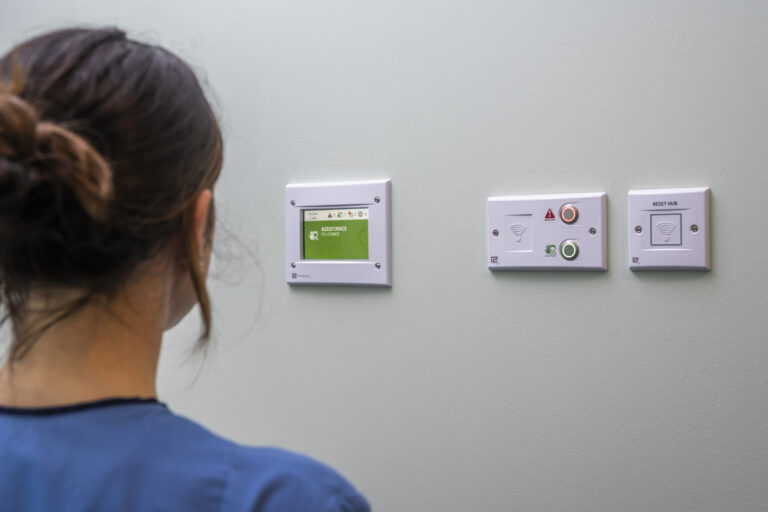
One example is the Pinpoint P2 System, which allows mental health professionals to discreetly summon assistance if they feel at risk or if a patient is in danger of harming themselves. Staff wear lightweight personal infrared transmitters (PITs), clipped to the uniform at the hip or integrated into an ID badge, ensuring they remain unobtrusive during everyday care.
The P2 System supports two levels of alert: an assist call, which notifies nearby staff via visual indicators above doors or through mobile devices when a situation may escalate, and a more urgent emergency call, which emits an audible alarm to prompt immediate action. This dual-response approach is particularly vital in mental health environments, where risks can escalate rapidly, and early intervention can be lifesaving.
The impact of these systems is already being seen in comparable care environments. At St. Brigid’s Hospital in Galway, staff provide ongoing care for long-stay residents living with dementia, many of whom experience psychological and behavioural symptoms associated with the condition. Feedback on the system has been positive, with staff reporting that they feel reassured about their safety at work and confident that help is readily available in an emergency. Whether a resident becomes abusive toward a team member or a patient is choking, staff can quickly call for support, knowing it will arrive promptly.
Investment in Ireland’s mental health services continues to rise, with Budget 2025 allocating almost €1.5 billion (the fifth consecutive year of record funding) to expand staffing, community support, and upgrade facilities nationwide. This sustained level of investment presents a critical opportunity to not just build or refurbish facilities, but to embed safety into their design from the outset.
As staffing pressures persist and demand for services remains high, modern safety technology is increasingly recognised as an essential part of this infrastructure. Integrating solutions such as Pinpoint’s staff safety alarms ensures that investment delivers real-world protection for frontline teams and the vulnerable people they support.
One of the clearest indicators of progress in Irish mental health care has been the sustained decline in restrictive practices. The Mental Health Commission data shows that episodes of seclusion and physical restraint fell by approximately 18% in 2024, and by nearly half compared with 2020, the lowest level recorded since national reporting began. This trend reflects a meaningful shift away from coercive interventions towards more rights-based, therapeutic models of care.
A key factor behind this progress is staff feeling empowered, supported, and safe in their roles. Systems like the P2 Safety System play a vital part in this. Knowing that help can be called at any time, staff can intervene earlier, preventing situations from escalating and reducing the need for restrictive measures. Patients, in turn, are less likely to behave aggressively, as they know support is always on hand.
When staff feel protected, they are able to focus on delivering high-quality care, respond calmly to challenging situations, and uphold patient dignity without distraction or fear. The result is a safer, more compassionate environment for both staff and patients alike.
If your organisation is reviewing safety measures or planning facility upgrades, now is the time to consider how staff safety alarms can support compliance, confidence and care delivery. To learn more about how staff safety alarms in Ireland can support frontline teams and protect vulnerable patients, speak to the Pinpoint team.