No products in the cart.

12 March 2026


Healthcare professionals strive to do the best for their patients, creating safe and comfortable environments to support recovery outcomes. Despite their best efforts, in some cases, individuals undergoing treatment can still be exposed to risks.
Medical emergencies, accidents and mental health crises can pose harm to patients, compromising their safety and that of others.
Providing patients and staff with a means to summon assistance in any high-risk scenario prevents the threat of serious harm to service-users through rapid intervention, de-escalation and professional medical support. The Pinpoint P2 System, offering users an immediate response when needed, does just this.
Let’s explore the potential challenges to patient safety and how the Pinpoint P2 System can help healthcare environments to reduce risk, increase patient confidence, and ultimately improve treatment outcomes.
Individuals in long-term care are often more vulnerable to risk due to the severity of their condition. In mental health units, for example, patients may be more prone to self-inflicted harm or dangerous behaviours. Providing patients with a means to call for assistance in such situations is critical to deterring high-risk incidents, improving the safety of all those on-site, and thereby enhancing the recovery journey of patients.
Patient Call Buttons
Patient Call Buttons offer patients in healthcare settings a means to request professional help when needed. In most cases, Patient Call Buttons are used to summon additional assistance to carry out daily activities. This might include accessing an outdoor area or carrying out a task that requires supervision. However, these devices can also be used to call for urgent support to deal with a mental health crisis or medical emergency.
Patients may activate the P2 Call Button if they see another person in mental or physical distress, or if they feel at risk of personal harm.
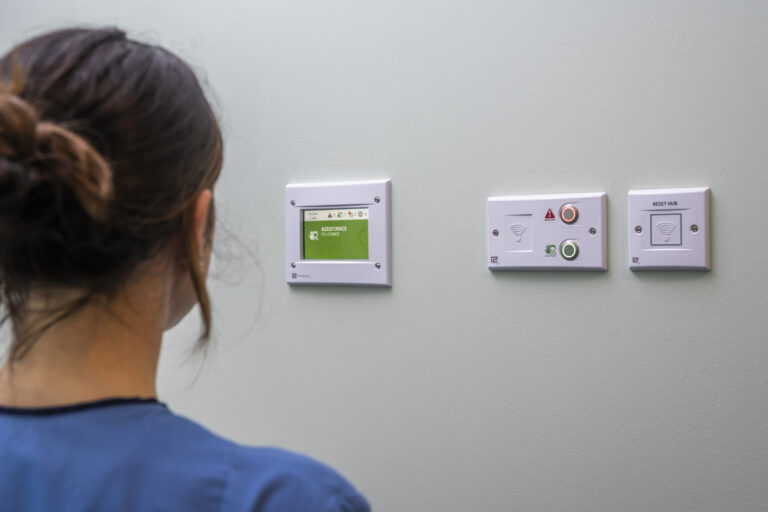
Mounted in accessible locations on the walls of an inpatient facility, the Patient alarms are activated by pressing the labelled ‘Patient Call’ button located on the device. Once triggered, the alarms transmit signals to receiver units installed within the ceiling, which in turn communicate the exact location of the active call to display devices for professionals to respond to.
For those with limited mobility, the Pinpoint Wander Lead offers patients a more accessible means to call for help. Connected to the Patient Call Button by a robust cord, the Wander Leads clip on to a patient’s bed, clothing or chair, enabling them to activate the alarm remotely.
Residents in care home settings can be more prone to falls and accidents, with research suggesting that elderly adults living in care homes are three times more likely to experience a major fall than those in their own homes. These figures can be linked to the severity of their condition, the less familiar environment, and certain medications.
While precautions can be taken to prevent such accidents from happening, in the event that a care home resident does fall, Pinpoint’s safety alarm system ensures that elderly residents can summon immediate assistance.
Wrist PITs
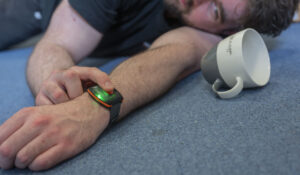
The Pinpoint Wrist PIT serves as a personal safety alarm for patients with significantly reduced mobility. Worn on the wrist of the user, the Wrist PIT enables patients to call for assistance by pressing a ‘Patient Call’ button on the device, which in turn activates the wider Pinpoint System and alerts staff to the exact location of the active alarm.
The wearable nature of the device increases alarm accessibility for care home residents, who may be unable to reach a wall-mounted Patient Call Button following a fall. In doing so, the WristPIT affords care home residents a degree of independence and freedom, while also providing reassurance that the wearer can always call for support should they need it.
Patient suicide remains a significant concern in healthcare facilities. Figures suggest, in Scotland alone, a patient takes their own life in mental health hospitals every five weeks, and the majority of inpatient suicides are by hanging. Removing the possibility of ligature events from taking place is therefore crucial to protecting patients vulnerable to self-harm in mental health units.
Anti-ligature door interface
In hospital settings, doors pose a high risk for suicide by hanging. Anti-ligature door solutions, such as those provided by Kingsway Group, monitor and detect when a potential ligature event is taking place. Should an event be suspected, Pinpoint’s door top interface notifies staff of its precise location, prompting an immediate response and swift intervention to prevent the risk of serious self-harm.
By removing the threat of ligature events, the Pinpoint anti-ligature door interface impels patients to better engage with the treatment program, supporting long-term recovery and providing reassurance to families that their loved one’s safety is paramount.
Despite every intention, patient risk cannot be eliminated from healthcare settings. The Pinpoint safety alarm system provides a robust solution to prevent serious harm to patients, ensuring that professional help can be delivered when needed most. As a result, families feel more confident that their loved one’s wellbeing is prioritised, patients feel safer and more secure, and long-term treatment outcomes are improved.
Interested in Pinpoint’s patient safety alarms? Get in touch with our team here to discuss the right solution for your workplace.