No products in the cart.

12 March 2026

For specifiers and architects planning healthcare projects, staff safety should be considered early on in the process. With multiple reports indicating increasing incidents of abuse toward healthcare workers, incorporating safety features within facility design demonstrates a commitment to staff wellbeing and establishes a safe working environment from the outset.
For specifiers looking into staff attack systems for a new build project or hospital refurbishment, there are a number of factors to weigh up. So, what should specifiers consider when choosing a hospital staff alarm system?
Performance is, of course, fundamental when specifying a staff attack system. Providing an immediate response during high-risk incidents, such systems must be reliable, accurate and efficient – and we’re proud to say our P2 System delivers on all fronts.
The use of infrared signals is a key reason why Pinpoint’s P2 System outperforms other staff attack alarms on the market. Infrared is not only more reliable than Wi-Fi based alternatives but also delivers efficient, accurate information when needed most.
The speed and precision with which infrared signals process alarm calls, taking mere milliseconds from activation to display, ensure colleagues are immediately alerted to the exact location and nature of active calls and can issue a timely and appropriate response.
Healthcare practitioners are constantly on the move, and any alarm device must be able to accommodate this.
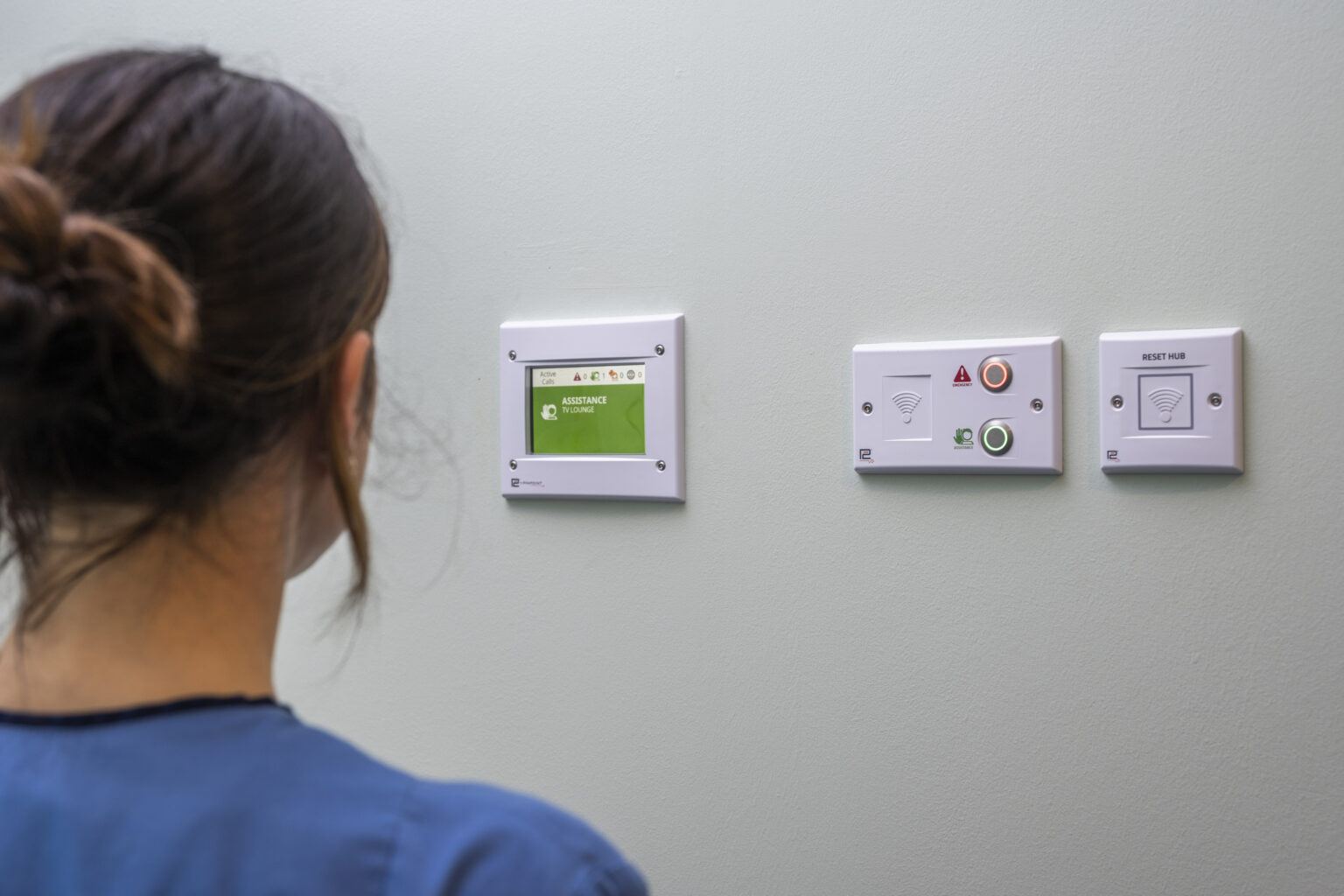
Our Personal Infrared Transmitters (PITs) are lightweight, discreet and accessible, with a simple activation process for use in high-risk scenarios. The incorporation of all-over rubberised material aids grip during Emergency call activation, which requires the user to pull the cap from its retaining pin. Equally, our colour-coded, graphical P2 Display Units clearly show both the location and nature of active calls, to facilitate swift understanding at a glance.
Each P2 System installation includes comprehensive training from our specially trained account managers to ensure every member of the team knows how to use the devices. Additional training manuals and guides are provided, while our 24/7 helpline desk provides staff with answers to any device-related questions.
Staff alarm systems rarely operate in isolation. When integrated with existing infrastructure such as CCTV, access control and zone management, they become a central part of a coordinated safety ecosystem. For example, CCTV recording can be triggered by an emergency alarm activation, covering the area where the incident is taking place. In other cases, a Pinpoint emergency alarm can initiate a lockdown protocol, restricting access to designated response staff and security personnel only. This coordination not only accelerates intervention but also enhances protection for both staff and patients at critical moments.
For specifiers, unified systems mean less complexity for estates teams, fewer interfaces for staff to learn and a more resilient solution over the lifetime of the building. For healthcare staff and managers, integration simplifies daily operation and significantly reduces long-term maintenance and management overheads.
Healthcare environments are demanding. Staff alarm equipment must be robust enough to withstand daily wear and tear and the risk of deliberate tampering. For specifiers planning hospital new builds, longevity must be a key priority.
The durability of the Pinpoint System is evidenced by our many long-term clients, several of which still hold elements of the original system installed 30 years ago. Specialist materials and features -- such as biomaster antimicrobial technology -- contribute to this, aiding the lifespan of the Pinpoint System and reducing long-term costs for clients.
Beyond the hardware itself, specifiers should consider the availability of ongoing support. Clear maintenance arrangements, warranties, and access to staff training all contribute to a system that remains effective long after installation. Our priority call-out service offers clients a response within four hours, with the addition of at least one preventative maintenance inspection each year to ensure any issues are caught early on. We also offer a 48-hour turnaround on repairs to reduce the impact on your operations.
Choosing the right staff attack system from the outset has far-reaching benefits. It reduces operational risk from day one, avoids costly retrofits and minimises disruption if installation is needed further down the line. It also helps protect the facility's reputation by demonstrating a clear, proactive commitment to staff and patient safety - reinforcing trust among stakeholders.
Beyond risk and reputation, the right staff alarm system directly supports better care delivery. When practitioners feel safe at work, they are better able to focus on patients. As Rachel Blackburn, head of Millenium Care Home, once told us, “Our staff finally feel perfectly safe as they know that their body-worn personal alarm will summon help immediately every time.”
Specifying a hospital staff attack system is about setting the standard, not just meeting it. By prioritising performance, usability, integration, maintenance and compliance from the outset, specifiers can help create safer environments. That’s why leading healthcare specifiers throughout the UK choose Pinpoint: a proven solution that supports staff safety, streamlines operations and lets clinical teams focus on what matters most.
To get expert advice on specifying the right solution for your healthcare project, contact us today.