Some healthcare buildings in Ireland predate modern safety standards. As a result, many facilities are now operating with staff safety systems that are outdated, unreliable, or no longer suited to current clinical demands.
For estates and facilities teams, this raises the question of how to upgrade critical infrastructure in buildings that were never designed to support it, without impacting day-to-day operations.
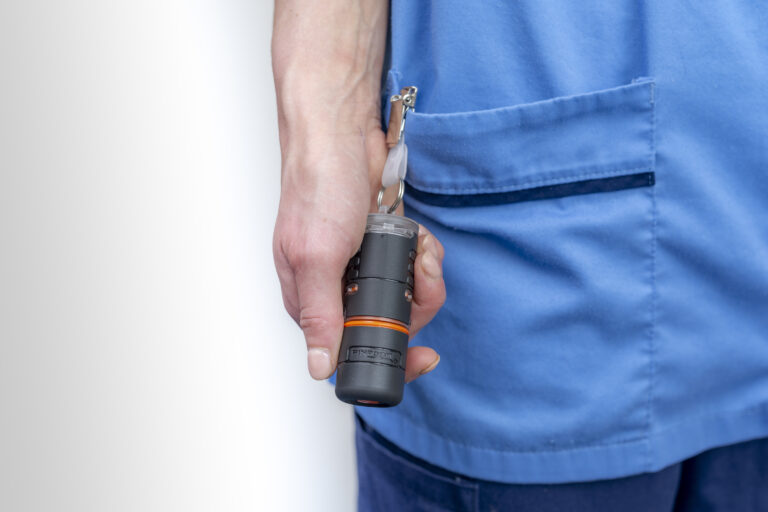
Pinpoint Ltd specialises in delivering these upgrades in active healthcare settings, installing staff safety systems that enable staff to quickly call for assistance, pinpoint their location, and trigger an immediate response during incidents. These systems are designed specifically for healthcare environments, where speed, reliability, and accuracy are essential.
When retrofitting safety alarm systems in live wards, a specialist approach is required to ensure maximum results in the long-term with minimal impact to current patients and staff.
The Challenge of retrofitting Safety Systems in Live Hospital wards
In the healthcare sector, you can’t close a ward, move a service or take systems offline for extended periods. Patients still need care, especially in community healthcare centres. This necessitates building works to be carried out when sites are operational. Yet, noise, restricted access, debris, and temporary disruption can quickly affect how care is delivered and add pressure to clinical teams.
In highly sensitive environments, such as mental health settings, the margin for error is even smaller. Changes to the physical environment, such as visible cabling, unfamiliar equipment, or increased activity, can all affect patient behaviour and escalate risk if not handled carefully.
There are also practical limitations. Many existing buildings lack the infrastructure to support modern systems. Cable routes may be limited, containment may be insufficient, and there may be restrictions on how and where work can take place. This often requires non-standard solutions to avoid invasive works that would impact the building fabric or clinical space.
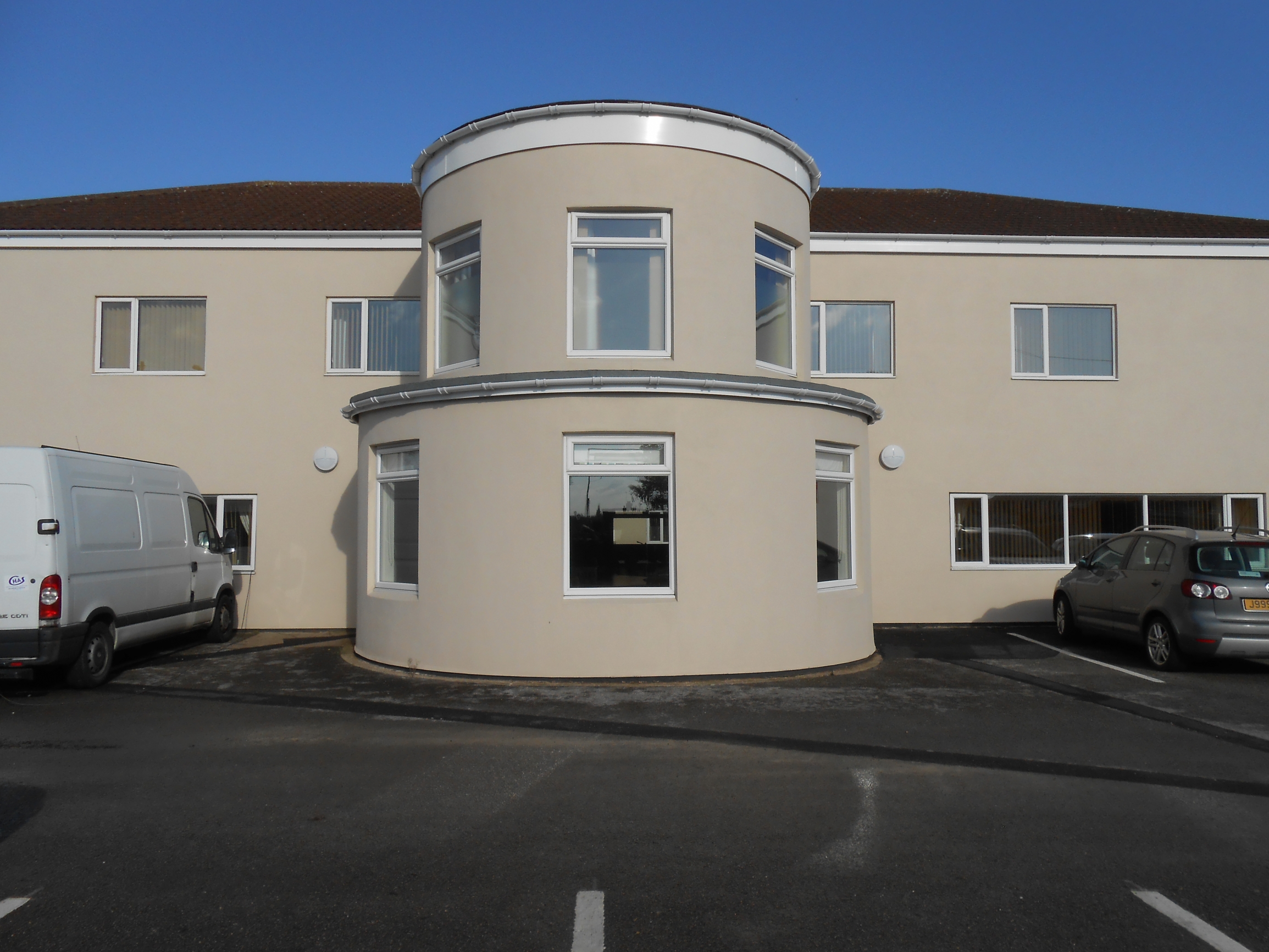
At Markievicz House, a primary care centre in Sligo, these challenges were clear from the outset. As a pre-2008 building, an asbestos report was commissioned to satisfy legal requirements and ensure the safety of installers, staff, and patients
How to Install Safety Systems Without Disrupting Patient Care
The first step is understanding how the building operates. That means working with clinical teams and management to map routines, identify constraints, and plan work around them.
At Markievicz House, this started with a pre-start meeting to agree on how the installation would be carried out. There was an option to cancel clinics, but the decision was made to work around the existing schedule instead.
Phasing is paramount. The installation of the staff safety system was broken into controlled stages so that consulting rooms remained operational and safety coverage was maintained throughout.
Planning also needs to be detailed. Early-stage surveys should identify viable cable routes, access limitations, and integration requirements. This reduces the likelihood of reactive changes during installation, which are often where disruption and delays occur.
In sensitive environments, how the system is installed is just as important as the system itself. Equipment needs to be positioned out of the way to avoid obstructing key routes. Equally, surface containment, device placement, and visibility all need to be considered to avoid creating an environment that feels overly clinical or unsettling.
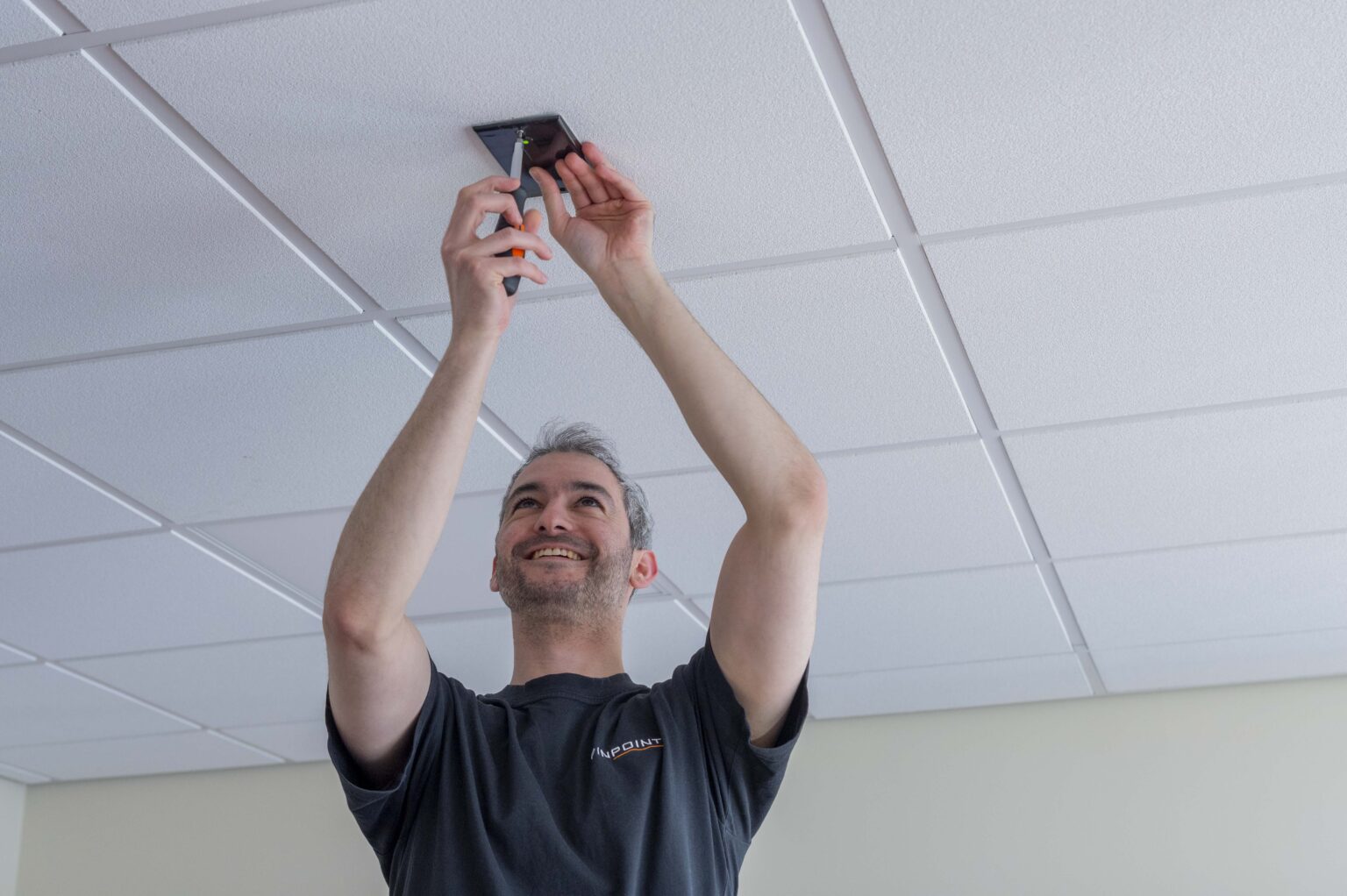
Communication underpins all of this activity. Regular coordination with staff ensures the installation stays aligned with daily activity. At Markievicz House, ongoing communication with the end users made it possible to install the Pinpoint System without disruption.
The Impact of a successfully retrofitted staff safety system
One of the main concerns for estates teams is whether upgrades will disrupt services.
In practice, when a retrofit is properly planned and delivered, there is no need to cancel clinics or pause operations. Systems can be upgraded around live environments, allowing facilities to remain fully functional throughout.
At Markievicz House, clinics continued as normal throughout the installation. By working around the existing schedule and maintaining clear communication with staff, the new system was installed without affecting patient care or daily operations.
Modern staff safety systems provide staff with a simple, reliable way to call for assistance, with alerts routed instantly to the right people and locations identified in real time. This improves response times and ensures incidents are managed more effectively. For staff, that means greater confidence, knowing support is there when it’s needed. In higher-risk environments, this has a direct impact on staff safety and patient outcomes.
There are also environmental benefits. New systems can be integrated discreetly, reducing the visibility of equipment while maintaining full functionality. This helps preserve a calmer, less institutional setting, particularly important in mental health and community care environments.
A well-executed retrofit shows that upgrading staff safety systems doesn’t have to come at the expense of operations. With the right approach, facilities can improve safety, maintain service continuity, and update infrastructure in a way that works for both staff and patients.
To learn more about retrofitting staff safety systems in live healthcare settings, get in touch with our team.