When organisations invest in staff safety systems, the priority is naturally protecting people. Whether it’s a personal staff alarm, wall-mounted units or a lone worker alarm, these systems are designed to provide reassurance and enable a rapid response when it’s needed most.
But when choosing a staff safety solution, there is more to consider than what happens during an emergency.
The environments in which these systems operate, how frequently devices are handled and the needs of the people who rely on them should all form part of the decision. One consideration that can sometimes be overlooked is hygiene.
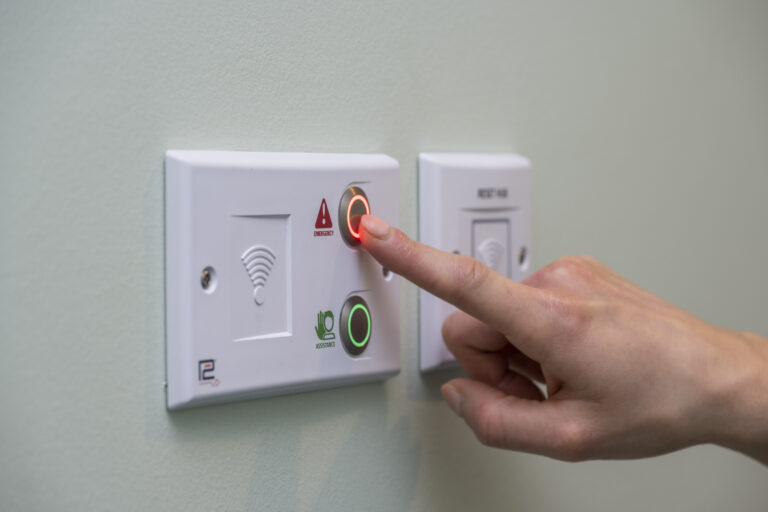
In environments such as hospitals, mental health facilities, schools, care homes and other public sector settings, staff safety devices may be handled repeatedly throughout the day. Personal devices are worn throughout a shift, shared between colleagues, patient call buttons are used multiple times throughout the day, and mounted call points are touched frequently.
That’s why hygiene should be considered alongside reliability, durability and ease of use when choosing a staff safety solution, particularly when the environment in which they are used are hygiene critical.
High-Touch Devices in High-Demand Environments
Healthcare professionals, teachers, support workers and carers rely on equipment that can withstand daily wear and use in demanding working environments.
Personal alarms, call points and other staff safety devices can be touched repeatedly during a working day. In some settings, devices may also be shared between users or cleaned regularly, making product design and material selection important considerations.
For manufacturers, this means thinking beyond how a product performs when it is activated. It means considering how that product will be used, handled, cleaned and relied upon throughout its working life.
While effective cleaning remains an essential part of hygiene and infection prevention, selecting products designed with hygiene in mind can provide an additional level of confidence and a key consideration for organisations operating in high-use environments.
Hygiene and Staff Safety Go Hand in Hand
A staff safety system shouldn't only perform reliably during an emergency, it should also be appropriate for the environment where it is used.
For organisations responsible for protecting staff across healthcare, education and care settings, this means looking beyond core functionality and considering features such as:
-
Durable construction that can withstand demanding daily use
-
Surfaces and materials that are suitable for regular cleaning
-
Materials designed for demanding environments
-
Long-term reliability with minimal maintenance
-
Additional technologies that help support product hygiene
These considerations are part of a wider approach to product design: ensuring that safety equipment remains practical, reliable and fit for purpose throughout its lifespan.
How Pinpoint Uses Biomaster Antimicrobial Technology
At Pinpoint, we believe staff safety and communication solutions should be designed around the environments in which they are used. Our products support people across a range of environments where staff, patients and service users rely on dependable technology every day.
When developing our solutions, we consider more than functionality alone. We look at how our products are handled, how frequently they are used and the environments in which they need to perform. Our staff safety systems are often used repeatedly throughout the day and may be handled by multiple people, particularly in environments where hygiene is an important consideration.
This led us to incorporate Biomaster® Antimicrobial Technology into selected Pinpoint products. We recognised that antimicrobial product protection could provide a valuable additional benefit for our products that are frequently handled and used as part of everyday working environments.
Biomaster is an antimicrobial additive based on silver ion technology. It is incorporated into the product during manufacturing, rather than being applied as a surface treatment. This means the antimicrobial product protection is designed to remain effective for the intended lifetime of the product and does not simply wear away through everyday use or cleaning.
Biomaster helps to inhibit the growth of microbes on the surface of treated products, helping to reduce levels of microbes that can develop on the surface, providing an additional layer of antimicrobial product protection.
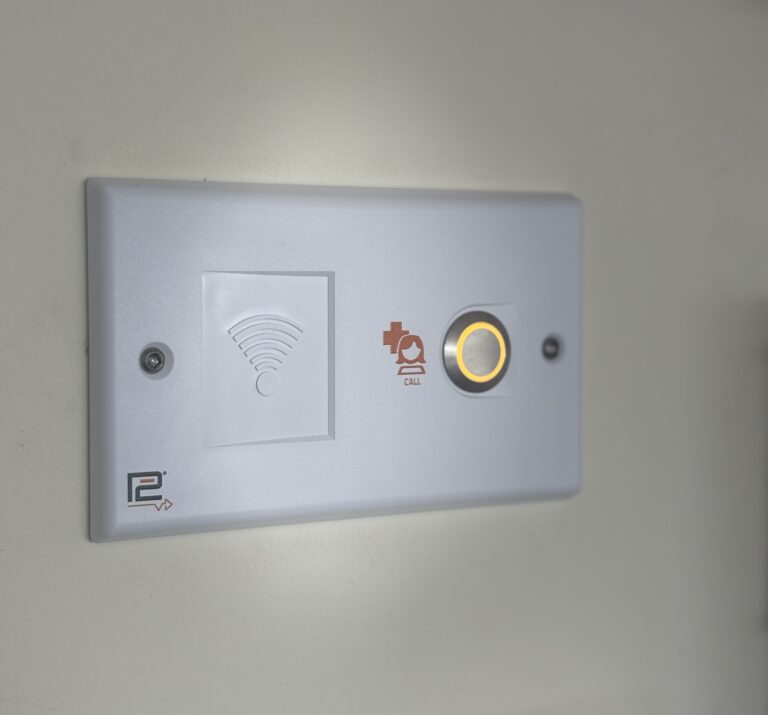
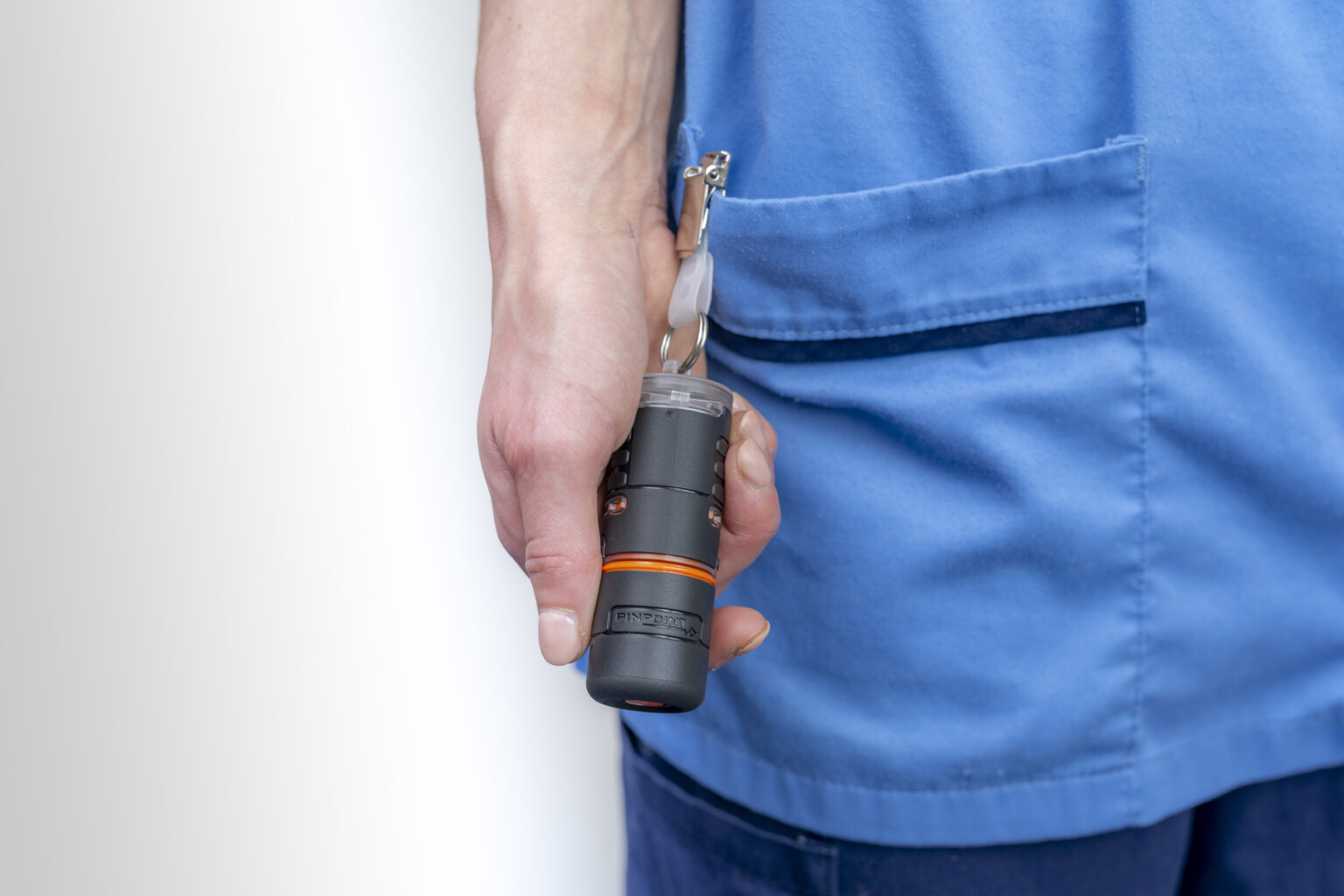
For Pinpoint this is particularly relevant to products that are designed to be handled and used repeatedly. Our P2 Personal Infrared Transmitter (PIT), for example, is designed to be worn throughout a shift and features a rubberised grip incorporating Biomaster technology. Our P2 Call Buttons also incorporate antimicrobial product protection.
By integrating Biomaster technology into selected products, we can provide an additional layer of antimicrobial product protection alongside the core safety and communication functionality people rely on.
Importantly, antimicrobial technology is not intended to replace regular cleaning or established hygiene and infection prevention procedures. Instead, it complements these practices by providing additional product protection between routine cleaning and everyday use.
More Than Adding a Feature
For Pinpoint, incorporating Biomaster was not simply about adding another feature to our products.
It came from considering the complete environment in which our technology is used and asking how we could develop solutions that better reflect the needs of the people and organisations that rely on them.
Innovation is not simply about developing new technology. It is about continually looking at how our products can better support the people who use them and the organisations they work within.
That means considering everything from the speed and reliability of an alarm through to the physical design of a device, its durability and how it performs within the environment around it.
Biomaster is one example of this approach: identifying an aspect of everyday product use and incorporating technology that can provide an additional benefit without compromising the primary purpose of the device.
Supporting Those Who Protect Others
Whether it’s a nurse responding to a patient, a teacher supporting a vulnerable pupil or a care worker assisting a resident, the people who use staff safety equipment need to know that it will perform when they need it.
Choosing the right staff safety system therefore involves more than selecting the features on a specification sheet. It is about understanding the reality of the working environment and considering how the equipment will be used every day.
Reliability, durability, usability and hygiene can all play a role in creating products that are appropriate for demanding working environments.
Discover Pinpoint Staff Safety Solutions
For more than 30 years, Pinpoint has worked with healthcare providers, schools, local authorities and other organisations to deliver dependable staff safety systems designed for real-world environments.
Our approach is to combine reliable staff safety technology with thoughtful product design, considering not only what our systems need to do, but the environments and people they are designed to support.
If you’re looking for staff safety solutions designed around the demands of your organisation, speak to the Pinpoint team to discuss your requirements.
Want to get the most from your Staff Safety System? Explore our guide to best practices for ensuring your personal safety device remains effective throughout its lifetime.
- Eilidh Mcintyre
- August 31st, 2026